
The hip adduction-to-abduction ratio, explained
The adduction-to-abduction (Add/Abd) ratio compares the strength of the hip adductors and abductors. What the research says about it, how to interpret it, and how to track it with GroinMate in ForceMate Cloud.
Published September 26, 2026 · 4 min read
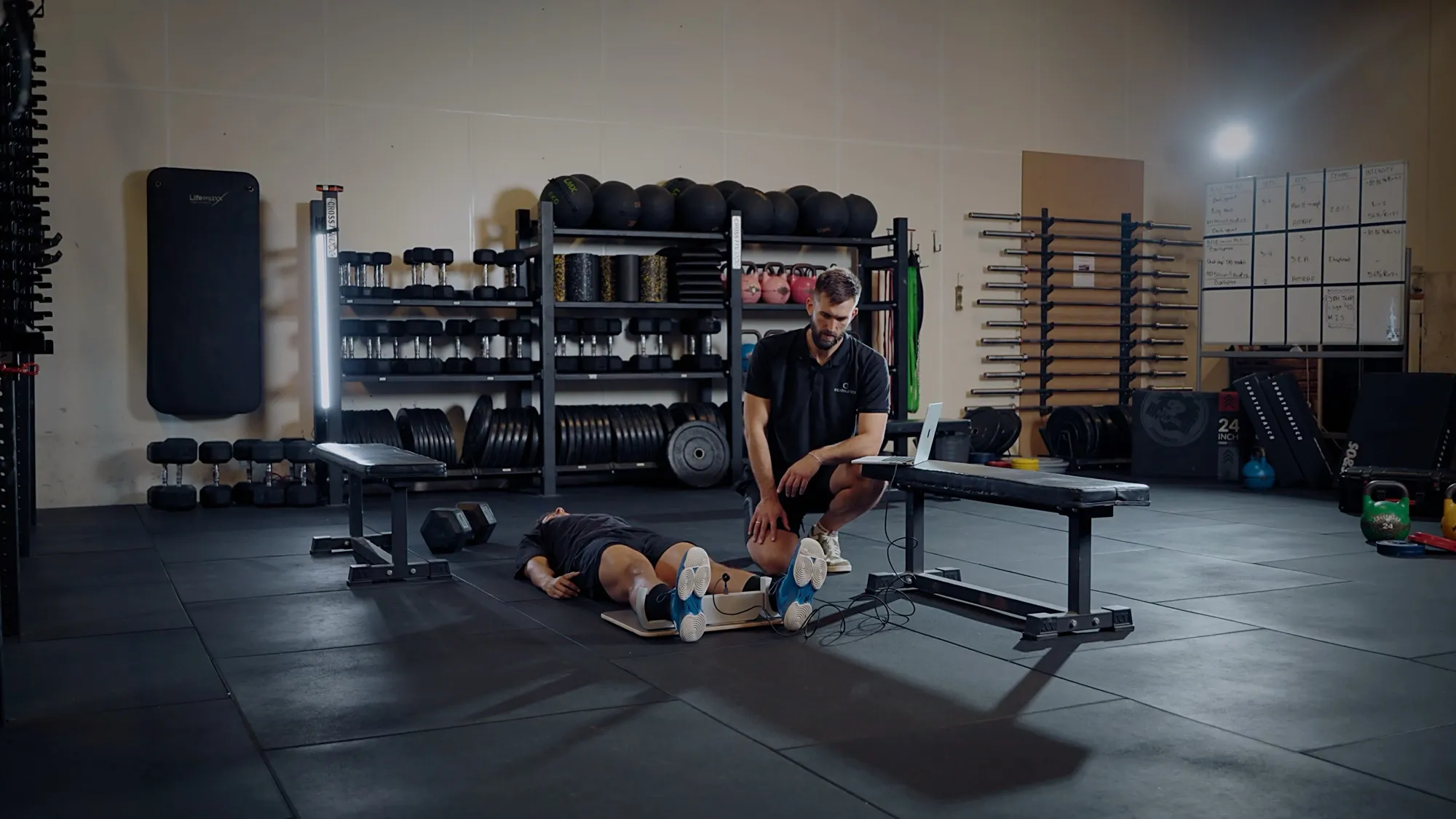
Hip adductor and abductor strength plays an important role in athletic performance, groin injury prevention and rehabilitation. Measuring each muscle group is useful, but comparing them through the adduction-to-abduction (Add/Abd) ratio adds another perspective on an athlete’s hip-strength profile.
With the Add/Abd ratio feature in ForceMate Cloud, coaches and clinicians can compare GroinMate measurements and monitor how the relationship changes over time.
What is the Add/Abd ratio?
The adductors bring the legs towards the body’s midline, while the abductors move them away from it. The Add/Abd ratio compares the force produced by these opposing muscle groups:
Add/Abd ratio
adduction force ÷ abduction force
0.80 = 80% · 1.00 = 100% · 1.20 = 120% of abductor force
ForceMate Cloud uses adduction as the numerator and Peak Force as the default metric. Total, left and right results can be viewed for individual athletes and teams, with comparisons across multiple trials.
What does the research tell us?
In 100 elite soccer players, Thorborg and colleagues found average isometric Add/Abd ratios of 1.04 on the dominant side and 1.06 on the non-dominant side. In a post-hoc analysis, players who reported groin pain during adduction testing showed a lower ratio of approximately 0.80 [1].
In a prospective study of professional ice hockey players, Tyler and colleagues found that athletes who later sustained adductor strains had lower preseason adductor strength relative to abductor strength than uninjured players [2]. These findings support measuring both muscle groups, but do not establish a universal injury-risk threshold.
A single “ideal” ratio has not been established for every athlete. Values can vary with sport, population, testing position and measurement method. For example, Griffin and colleagues investigated ratios in elite academy footballers using isokinetic testing; these findings should not be directly equated with isometric GroinMate measurements [3].
How should coaches interpret the ratio?
Interpret the Add/Abd ratio alongside absolute strength, side-to-side differences, symptoms and previous results. A ratio close to 1.0 does not necessarily mean that both muscle groups are sufficiently strong or that injury risk is low.
Consistency matters: keep athlete position, pad placement and testing instructions the same across sessions. Thorborg and colleagues demonstrated good test-retest reliability for standardized hip-strength assessments, providing a foundation for monitoring changes over time [4]. Our guide to adductor and groin strength testing covers the testing protocol itself.
Adductor strength can also be improved through targeted training. In a randomized trial, Harøy, Thorborg and colleagues observed a 41% lower risk of reporting groin problems among male footballers following an adductor-strengthening programme [5]. This supports strengthening interventions, but does not define a preventive Add/Abd cutoff.
From research to GroinMate
During the development of GroinMate, Kristian Thorborg’s leg length helped determine the width of the device’s adduction pads.
Bringing adduction and abduction results together in ForceMate Cloud makes it easier to follow an athlete’s strength profile, identify changes and support evidence-informed training and rehabilitation decisions. GroinMate has also collected the squeeze data in a peer-reviewed study in the Scandinavian Journal of Medicine & Science in Sports tracking 114 elite youth footballers.
References
- Thorborg K, Serner A, Petersen J, et al. Hip adduction and abduction strength profiles in elite soccer players: implications for clinical evaluation of hip adductor muscle recovery after injury. Am J Sports Med. 2011;39(1):121–126. View study
- Tyler TF, Nicholas SJ, Campbell RJ, McHugh MP. The association of hip strength and flexibility with the incidence of adductor muscle strains in professional ice hockey players. Am J Sports Med. 2001;29(2):124–128. View study
- Griffin VC, Everett T, Horsley IG. A comparison of hip adduction to abduction strength ratios, in the dominant and non-dominant limb, of elite academy football players. J Biomed Eng Inform. 2016;2(1):109–118. View study
- Thorborg K, Petersen J, Magnusson SP, Hölmich P. Clinical assessment of hip strength using a hand-held dynamometer is reliable. Scand J Med Sci Sports. 2010;20(3):493–501. View study
- Harøy J, Clarsen B, Wiger EG, et al. The Adductor Strengthening Programme prevents groin problems among male football players: a cluster-randomised controlled trial. Br J Sports Med. 2019;53(3):150–157. View study
Want to see how GroinMate and the Add/Abd ratio fit into your screening? Get in touch with the CC Athletics team.
Frequently asked questions
What is the hip adduction-to-abduction ratio?
The Add/Abd ratio is adduction force divided by abduction force. It compares the strength of the muscles that pull the legs together (adductors) with the muscles that move them apart (abductors). A ratio of 1.0 means both muscle groups produce the same force; 0.80 means the adductors produce 80% of the abductors' force.
What is a normal adduction-to-abduction ratio?
In 100 elite soccer players tested isometrically, average ratios were 1.04 on the dominant side and 1.06 on the non-dominant side. Players who reported groin pain during adduction testing averaged around 0.80. Values vary with sport, population, testing position and measurement method, so no single ideal ratio applies to every athlete.
Does an adduction-to-abduction ratio of 1.0 mean low injury risk?
No. A ratio close to 1.0 does not necessarily mean both muscle groups are strong enough or that injury risk is low. Interpret the ratio alongside absolute strength, side-to-side differences, symptoms and the athlete's own previous results.
How do you measure the adduction-to-abduction ratio?
Measure maximal adduction force and maximal abduction force under the same conditions, then divide adduction by abduction. A dynamometer such as GroinMate records both directions per leg, and keeping athlete position, pad placement and instructions identical across sessions makes the ratio comparable over time.
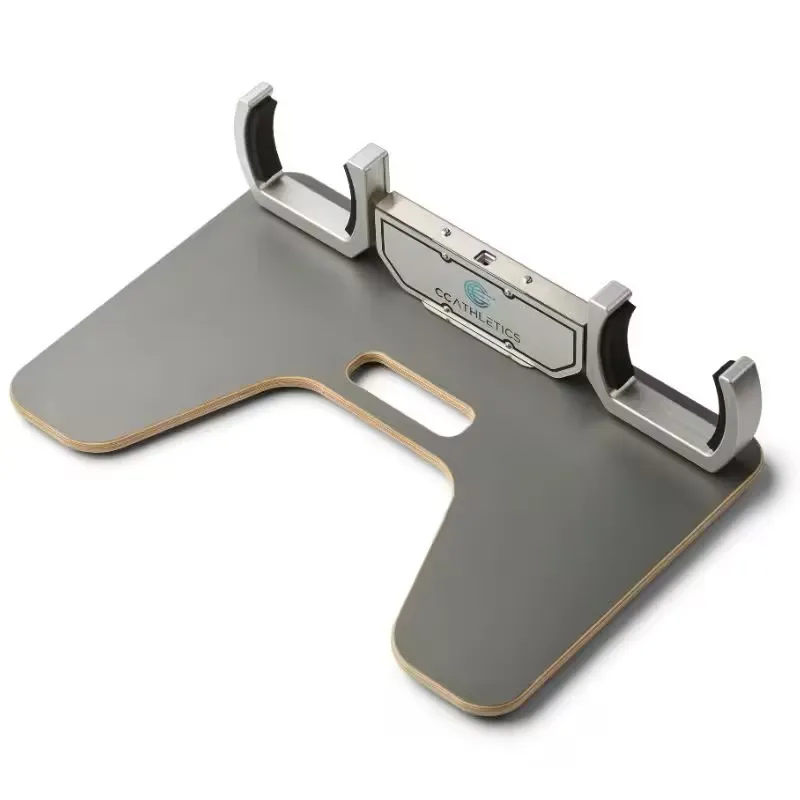
The product behind this article
GroinMate
Isometric testing for hip adduction and abduction
Explore GroinMate →