
October 29, 2026 · 4 min read
Backing Up the Clinical Eye: How AH Physiotherapy & Sports Performance Uses PlateMate in Rehab and Performance
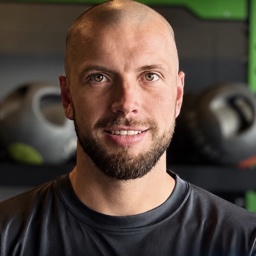
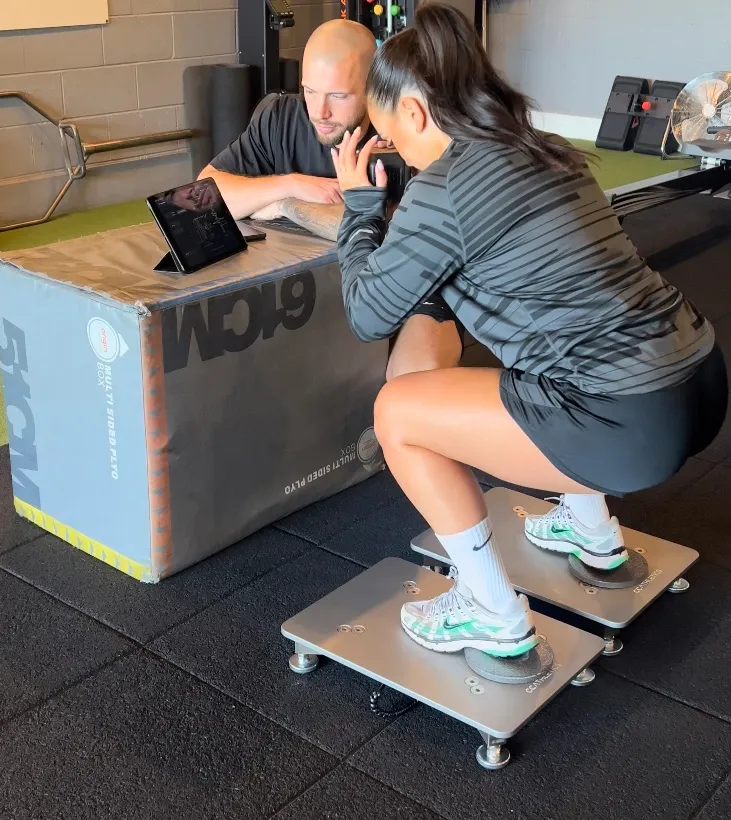
Andrew Henson uses PlateMate force plates for both rehab and performance. In rehab, the numbers support progression and return-to-play decisions. In performance testing, sport-specific strength profiles show areas needing development and asymmetries that could raise injury risk. The data even caught a 10-week post-ACL patient offloading more than 20% of the load from her injured leg, though the squat felt even to her.
The challenge: objective numbers behind every decision
Andrew’s clients range widely. Some are coming back from soft tissue injuries, knee, ankle and foot problems, or upper limb injuries. Others are post-surgery cases such as ACL reconstructions and Achilles repairs. Others are athletes looking to find areas to support performance development. He also works with non-athletes where it suits.
“I wanted objective numbers to support the rehab progression and return-to-play decisions, both for me and for the athlete, with data to support what I see clinically and visually.”
Force plates fit that need. They let him measure force capabilities and symmetries in a way that is quick, repeatable and easy to show people.
Why PlateMate?
Andrew gave three reasons for choosing PlateMate:
- Portability: the system is portable.
- An affordable price point as a start-up business.
- Non-subscription software, with support available when needed.
How the plates are used
Rehab: testing at the right moment
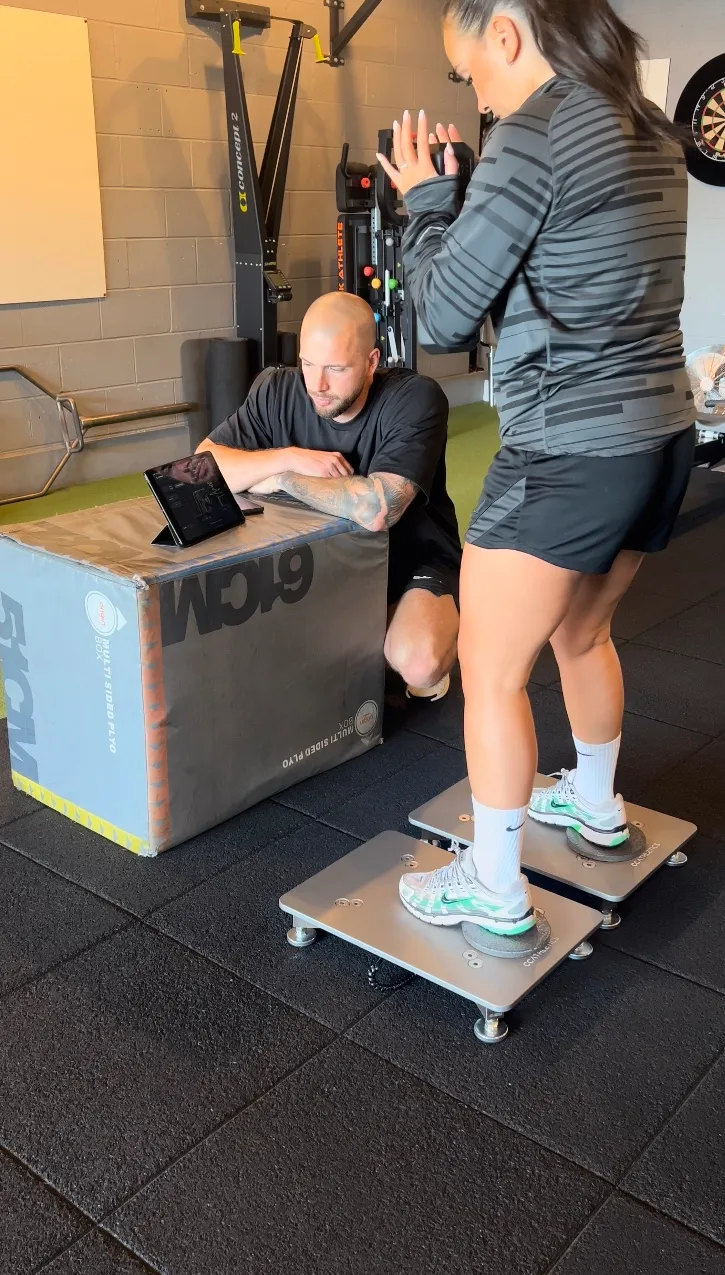
Every rehab session starts with a clinical assessment. Andrew goes through the patient’s injury history, the stage of the injury and how their rehab has gone so far. From that, he decides whether testing on PlateMate is appropriate yet.
When it is, he picks the tests to match the patient’s current capability and stage of rehab:
- Isometric strength testing
- Functional movement and balance testing
- Jump testing
Performance: a sport-specific strength profile
For performance clients, Andrew uses a strength profile built around their sport and its demands. It mixes jump tests and isometric strength tests to show areas that need development. It also flags asymmetries that could put the player at higher risk of injury later on.
A clear report every time
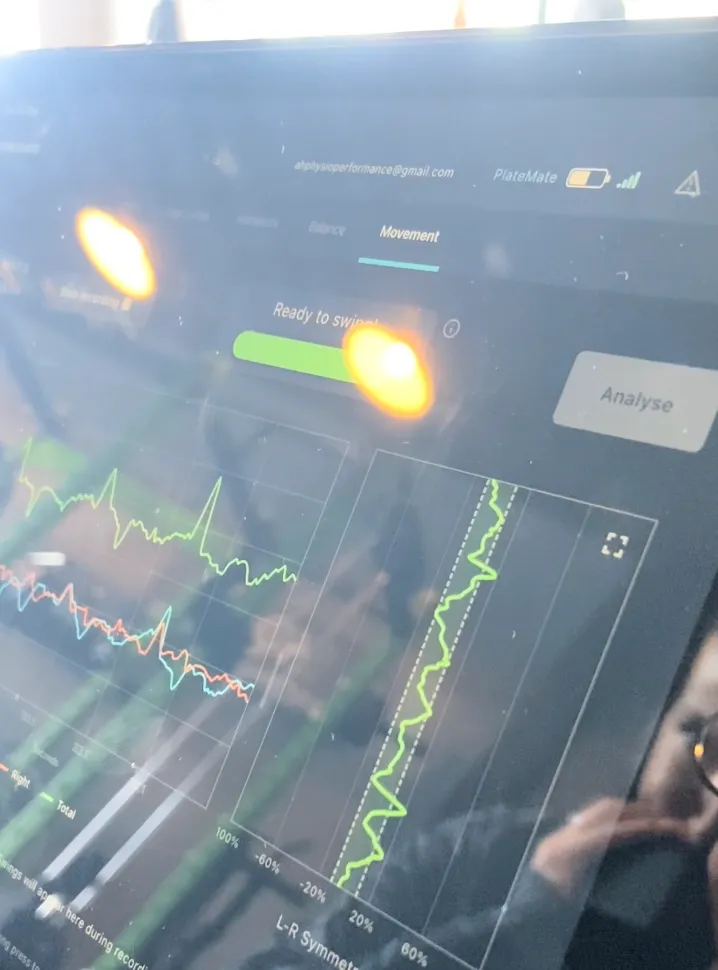
Rehab and performance clients both get a report after testing. It sets out clear areas to focus on in their rehab programme or their performance training.
Key result: the offloading pattern she couldn’t feel
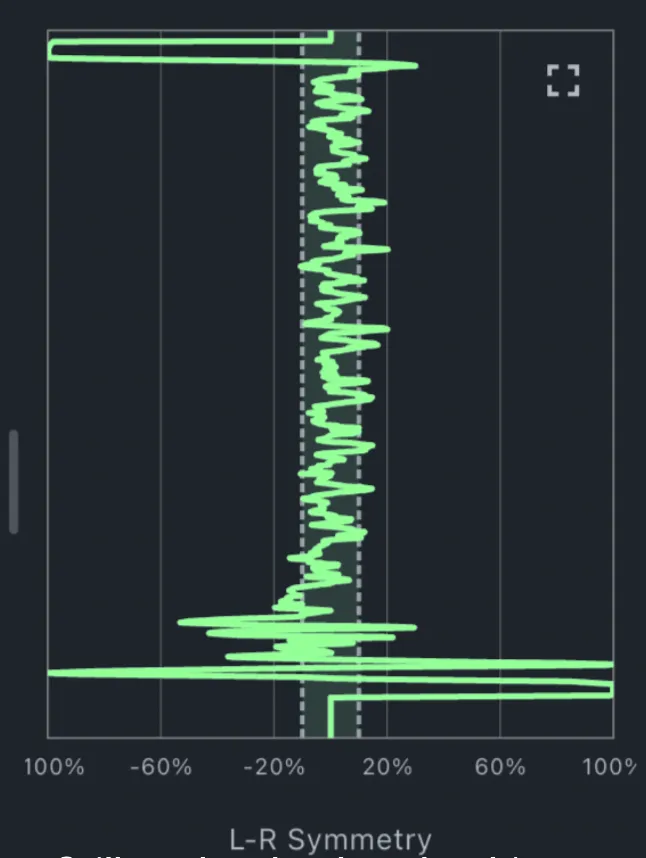
One patient was 10 weeks out from an ACL reconstruction. During a squat assessment on PlateMate, the data showed she was offloading more than 20% of the load away from her injured limb. To her, the squat felt even, and she would have taken that pattern into her daily rehab away from the clinic.
10 weeks
post ACL reconstruction
>20%
load offloaded from the injured limb
Improved in the same session
PlateMate gives live feedback, so Andrew could address the problem straight away. He gave her a different feel to focus on during the squat, and she watched the numbers even out as she did it. On the re-test she was distributing force much more evenly, and she took that into her own gym sessions.
Why it mattered
This mattered a lot at that stage. They were about to increase the loading on her knee and start working towards landing, jumping and, eventually, running in the following weeks.
“If we hadn’t picked it up, she could have carried that offloading pattern into heavier loading and landing work. That would have raised her risk of re-injury or held up her progress through rehab.”
Business impact: a new service and a clear edge
Asked whether the plates have helped his business, Andrew said: “Yes, a lot.”
- A new, separate service: PlateMate made his Injury Strength Profile Assessment possible as a stand-alone offering.
- More engaged clients: the plates give his rehab a clear structure. Clients see their progress in numbers rather than having to take his word for it, and that keeps them engaged.
- Standing out: when he talks to clubs and coaches, objective testing sets him apart from a standard physio clinic.
- New opportunities: the plates have opened up conversations about further services for athletes, clubs and other businesses. This separates him from other physio services in his area.
Want to add objective testing to your clinic?
PlateMate gives physios and performance coaches portable force plate testing with no software subscription. See how it could fit into your rehab and performance work.
Book a demoFollow Andrew on Instagram: @ah_physioperformance
Website: www.ahphysioperformance.co.uk